What Your Footprint Is Trying to Tell You
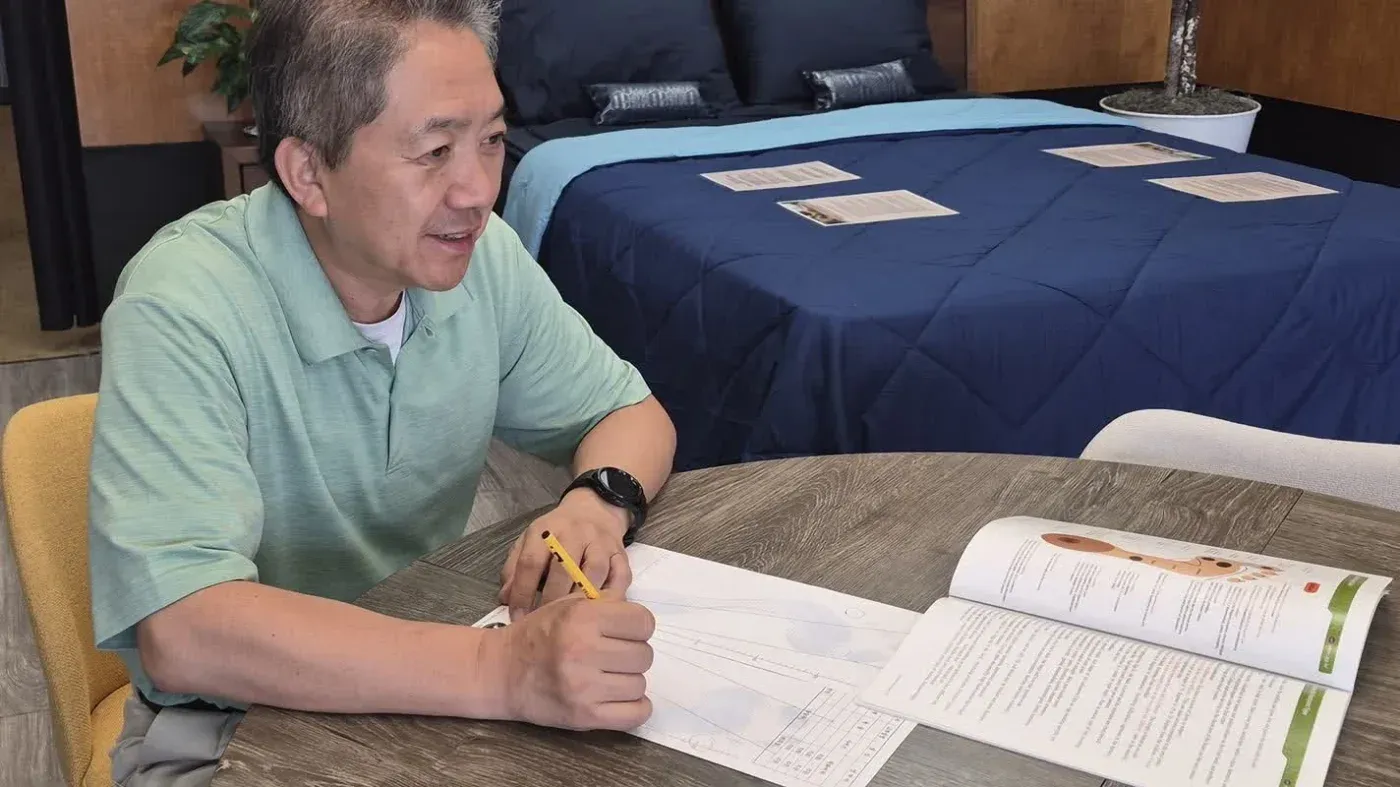
Hey Tucson! Geon here, your local shoe engineer at JGP USA.
Have you ever stepped out of the shower, looked at your wet footprints on the bath mat, and noticed they look a little... asymmetrical?
Just like a mechanic reads the wear patterns on a tire to understand a car’s alignment, we can read a footprint to understand your body’s structural foundation. It is essentially a “blueprint” of how you carry your weight.
When taking footprints at the store, people are often surprised by what they see. Even if you don’t feel any pain, there are subtle structural shifts that show up very frequently. Here are 5 fascinating “hidden imbalances” your footprint might reveal:
1. The Left-Right Mismatch
Did you know your left footprint might not look the same as your right? Maybe one arch is visibly flatter, or one foot leaves a much darker print. When your foundation is unbalanced left-to-right, your pelvis and spine have to slightly twist to keep you upright. This is often the hidden cause when you experience joint fatigue or pain on only one side of your body!
2. The “Ghost” Toes
If your pinky toe or middle toes are completely missing from the print, your body weight is shifting too far backward or inward. When your toes can’t grip the ground, your knees and lower back work overtime to keep you balanced.
3. The Big Toe Angle
Is your big toe pointing straight ahead, or curving inward? This inward curve is often the first visual sign of shoe crowding before you even feel pain. Your big toe is the anchor of your balance!
4. The Dark Pressure Spots
If you see very dark, concentrated spots (especially under the ball of the foot or the heel), your body is putting excessive, uneven pressure on one small area. Over time, this leads to heavy legs and joint fatigue.
5. The ‘C’ Curve Arch
The inside of your footprint should ideally look like a smooth letter ‘C’. If it’s completely filled in (flat foot) or barely connected (high arch), your foot’s natural shock-absorbing “spring” might be struggling.
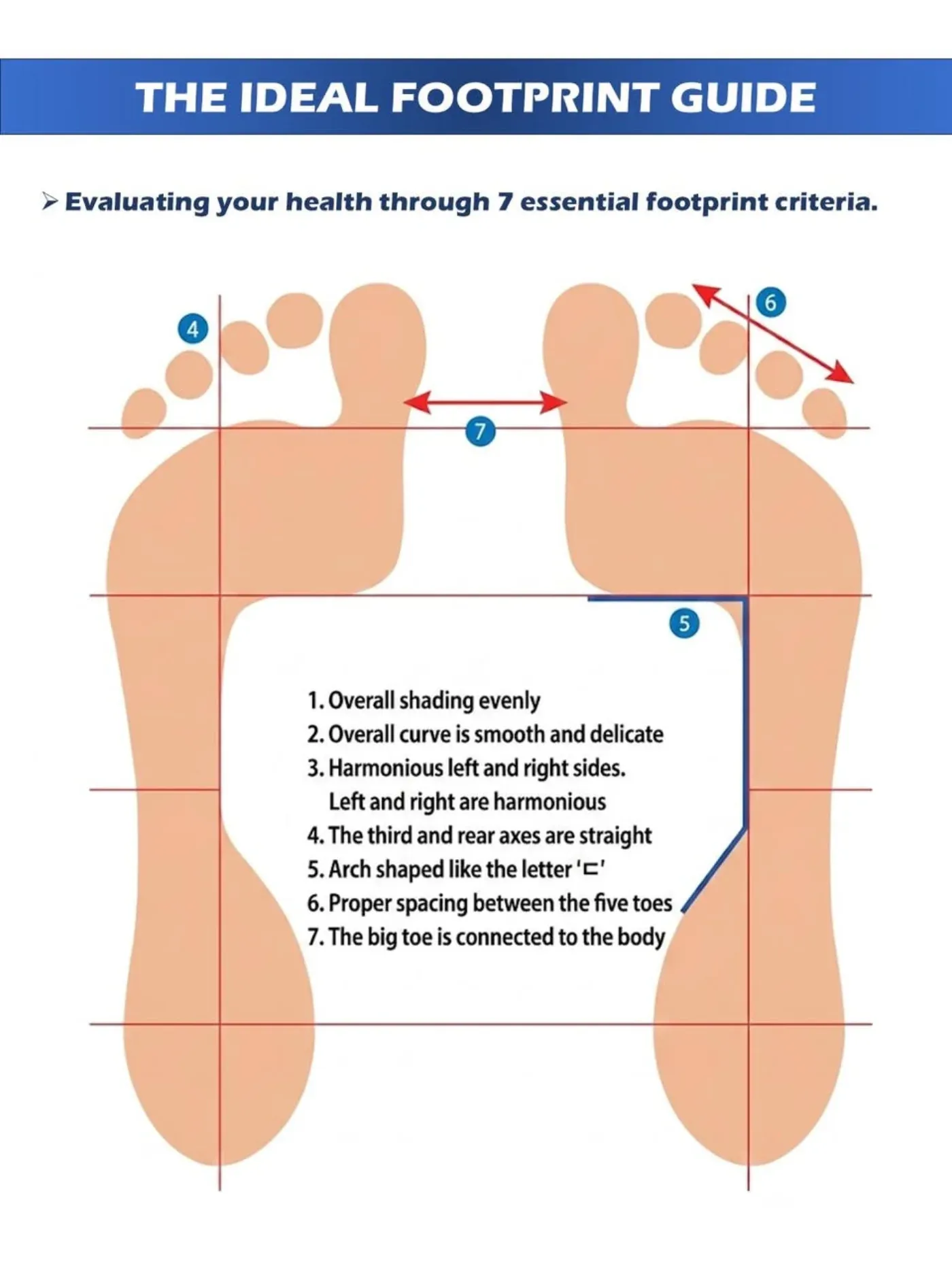
The ideal footprint guide: seven things we look at when we read a footprint at the store.
Of course, a footprint is not a medical diagnosis! But it is an incredibly useful visual tool to see how your foundation is currently holding up.
Quick question: Next time you step out of the shower, take a quick look at your footprints. Do they look like a matching pair, or does one side look noticeably different? Tell me when you stop by, and bring along a friend or family member who stands all day for work!
Curious About Your Own Structural Blueprint?
I’d love to invite you to the store to check it out. Stop by JGP USA (6458 N Oracle Rd) and mention this post to receive:
- A Complimentary Footprint Observation: We will check your left-right balance, arch shape, and pressure points.
- A 10-Minute Stability Experience: Feel firsthand the difference proper structure makes for your body.
- A personal note with your ideal fit and a small gift
- 10% Welcome Credit: Toward your first JGP purchase (Valid for 7 days after your visit. Absolutely no pressure to decide on the spot!).
Walk-ins are always welcome! But if you prefer a dedicated one-on-one time, you can book a quick appointment here or simply text or call us at 520-488-8824.
Want to Go Deeper? Watch the Video
If you are a visual learner and want to dive deeper into exactly how to read your own footprint, I put together a detailed video on our YouTube channel. In it I explain step by step how to analyze the pressure points, arch shapes, and what they mean for your body’s overall alignment: How to Read a Footprint: The 7-Step Analysis Guide (Real Case).
You can also read how footwear shapes these patterns in The 95% Footprint Question and see the shoes we fit people with in The Collection.
Looking forward to meeting you and checking your balance!
Geon Seo, JGP USA (Oro Valley / Tucson)